In today’s fast-paced world, stress and anxiety have become common challenges for many people. Constant responsibilities, work pressure, personal concerns, and information overload can leave us feeling mentally exhausted and emotionally overwhelmed. While occasional stress is a natural part of life, ongoing anxiety can affect both mental and physical well-being.
Meditation is one of the most effective and natural ways to calm the mind and restore emotional balance. The best part is that you don’t need any special equipment or years of experience to get started. Just a few minutes of daily practice can help you feel more relaxed, focused, and at peace.
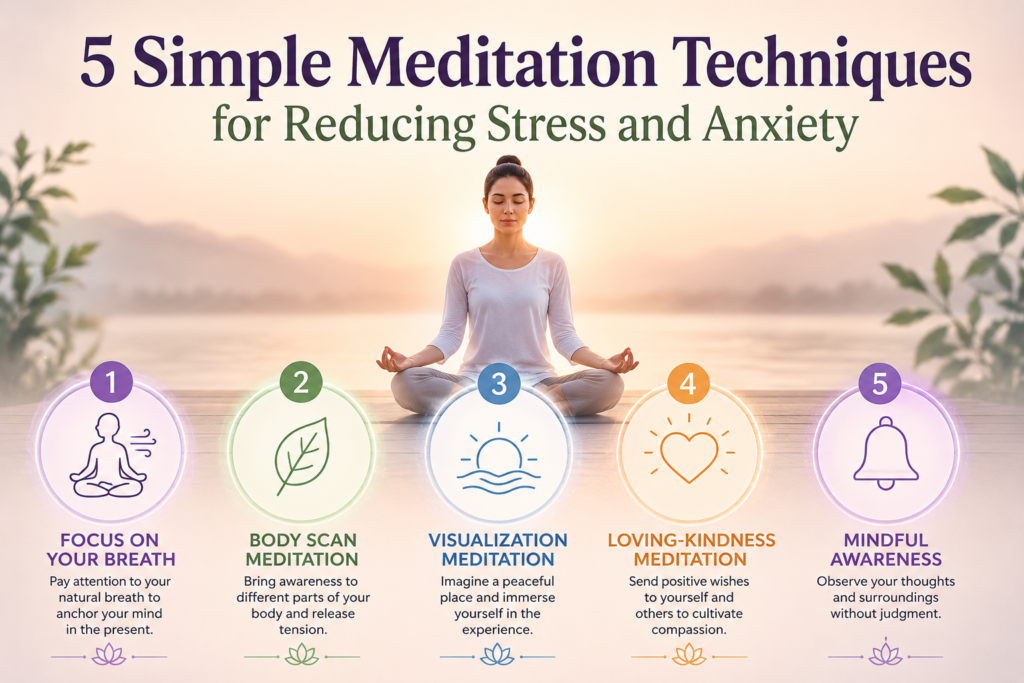
Here are five simple meditation techniques that can help reduce stress and anxiety in your daily life.
1. Mindful Breathing Meditation
Mindful breathing is one of the easiest meditation techniques for beginners. It helps bring your attention away from worries and into the present moment.
How to Practice:
- Sit comfortably in a quiet place.
- Close your eyes and focus on your natural breathing.
- Notice each inhale and exhale without trying to change it.
- If your mind wanders, gently bring your attention back to your breath.
Benefits:
- Reduces racing thoughts
- Calms the nervous system
- Improves focus and concentration
- Helps manage anxiety
Even five minutes of mindful breathing can make a noticeable difference in your stress levels.
2. Body Scan Meditation
Stress often causes tension to build up in the body without us realizing it. Body scan meditation helps release physical and emotional tension by bringing awareness to different parts of the body.
How to Practice:
- Lie down or sit comfortably.
- Close your eyes and take a few deep breaths.
- Slowly focus on each part of your body, starting from your toes and moving upward.
- Notice any tension, discomfort, or sensations without judgment.
- Allow each area to relax as you move your attention through the body.
Benefits:
- Promotes deep relaxation
- Reduces muscle tension
- Increases body awareness
- Helps improve sleep quality
3. Guided Visualization Meditation
Visualization uses the power of imagination to create feelings of calm and safety. This technique is especially helpful during periods of stress or emotional overwhelm.
How to Practice:
- Sit comfortably and close your eyes.
- Imagine yourself in a peaceful place, such as a beach, forest, or garden.
- Focus on the sights, sounds, and sensations of that environment.
- Spend several minutes fully experiencing the scene in your mind.
Benefits:
- Creates a sense of peace and comfort
- Reduces anxious thoughts
- Encourages positive emotions
- Helps improve mood
The more vividly you imagine the scene, the more relaxing the experience can become.
4. Loving-Kindness Meditation
Also known as “Metta Meditation,” this practice focuses on cultivating compassion and positive emotions toward yourself and others.
How to Practice:
- Sit quietly and take a few deep breaths.
- Silently repeat positive phrases such as:
- May I be happy.
- May I be healthy.
- May I be peaceful.
- Gradually extend these wishes to loved ones, friends, and even people you find difficult.
Benefits:
- Reduces negative emotions
- Increases self-compassion
- Improves relationships
- Promotes emotional healing
This meditation can be especially helpful when stress is linked to emotional challenges or relationship difficulties.
5. Mantra Meditation
A mantra is a word, phrase, or affirmation repeated during meditation to help focus the mind and reduce distractions.
How to Practice:
- Choose a calming word or phrase such as:
- Peace
- Calm
- I am safe
- I am at peace
- Sit comfortably and repeat the mantra silently or aloud.
- Continue for 5–10 minutes while focusing on the sound and meaning of the words.
Benefits:
- Improves concentration
- Reduces mental clutter
- Encourages positive thinking
- Creates a sense of inner stability
Mantra meditation is particularly useful for people who find it difficult to quiet their thoughts.
Tips for Building a Meditation Habit
If you’re new to meditation, start small and stay consistent.
- Begin with just 5–10 minutes daily.
- Choose a quiet and comfortable space.
- Practice at the same time each day.
- Be patient with yourself.
- Remember that meditation is not about stopping thoughts but learning to observe them calmly.
With regular practice, meditation becomes easier and more effective over time.
Final Thoughts
Stress and anxiety can affect every aspect of life, but simple meditation practices can help bring balance, clarity, and peace. Whether you choose mindful breathing, body scan meditation, visualization, loving-kindness meditation, or mantra meditation, each technique offers unique benefits for emotional well-being.
The key is consistency rather than perfection. Even a few minutes of meditation each day can help reduce stress, calm anxious thoughts, and improve your overall quality of life. Start with one technique that feels comfortable and gradually make meditation a meaningful part of your daily routine.